


Today I want to speak about something that has bothered me since I began learning English at eight years old: the word Chinese does not fully reflect the inner identity of native Chinese people.
In Chinese, we have many ways of referring to ourselves because our cultural identity has been shaped across thousands of years, through many dynasties, diverse ethnic lineages, memories, and collective becoming. One of my favorites is 中华 (Zhōng Huá).
中 (Zhōng) means center, middle, or centeredness.
华 (Huá) evokes radiance, beauty, flourishing, and refinement.
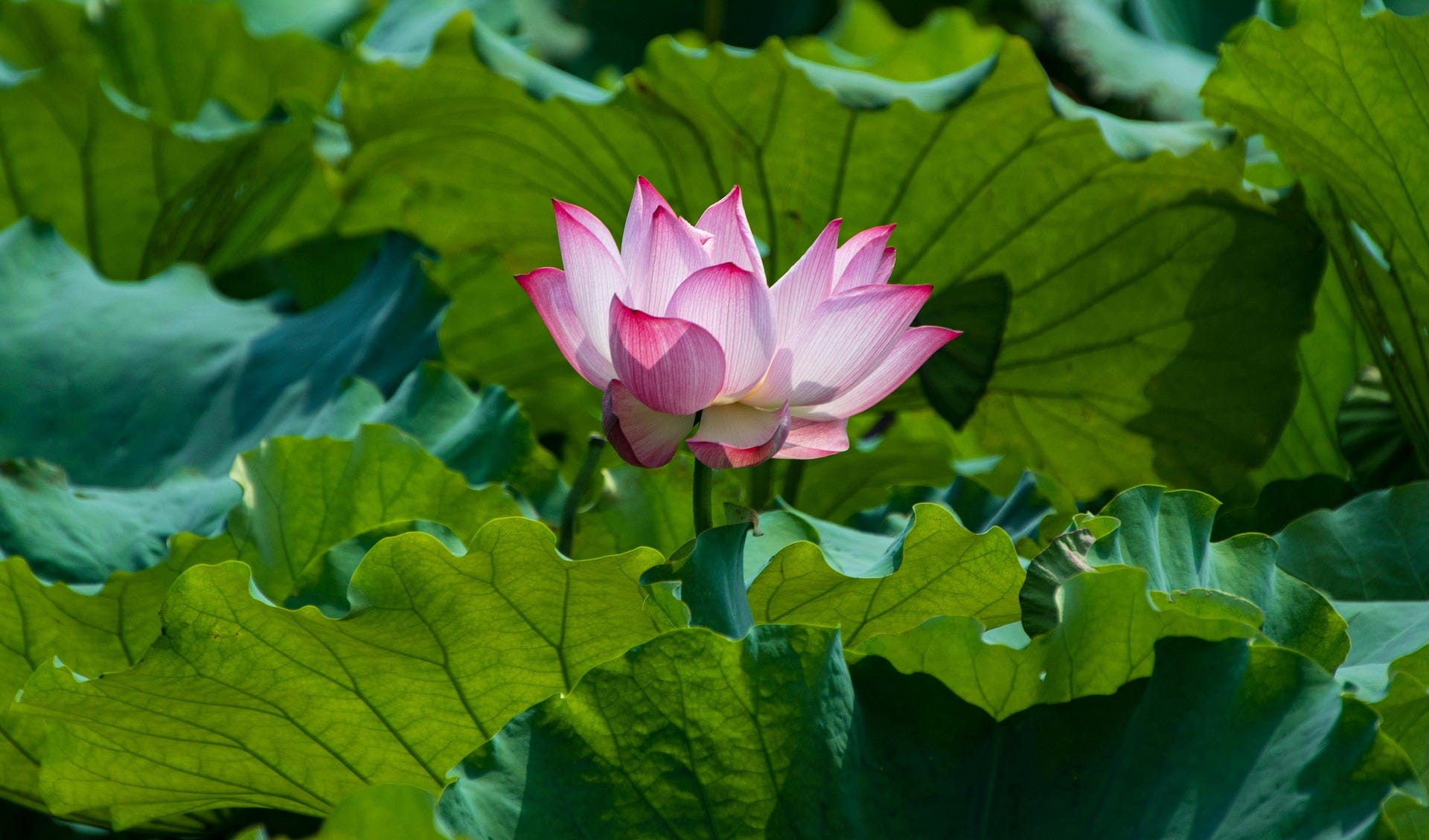
Put together, 中华 carries, for me, the feeling of a gentle, radiant glow at the center.
We call ourselves 中华儿女—the daughters and sons of Zhōng Huá, the daughters and sons of the gentle glow at the center. I hear in this phrase something more intimate and alive than a national label.
This gentle glow is not just a pretty idea. It is woven into the soul of Chinese culture and history. Across the rises and falls of dynasties, political systems, social upheavals, migrations, and renewals, something of this center has continued to pulse through the civilization.
The word 中—center—is sacred.
A passage from the Confucian classic Doctrine of the Mean speaks to this:
Before the emotions of joy, anger, sorrow, and pleasure arise, there is a state called zhōng—equilibrium, centeredness.
When emotions arise and are expressed with balance and right proportion, this is called hé—harmony.
None of this subtlety, cultural depth, or inner orientation is carried by the English word China.
There are many theories about the origin of the English word China. Some sources trace it to the Qin 秦 dynasty, pronounced somewhat like “Chin,” which unified the empire around 221 BCE. Ironically, the Qin dynasty lasted only about fifteen years—one of the briefest imperial dynasties—yet its name came to represent an entire civilization in the Western world.
For me, the Qin dynasty feels far away from the living center of my cultural identity. And the English word china, with its association with fine porcelain, carries another layer of discomfort: the memory of European fascination with Chinese goods, entangled with the painful and humiliating history of colonial-era encounters with the West.
The culture I come from is far more vast, complex, and internally diverse than either an ancient dynasty or an exported object.
China is a multi-ethnic, multi-cultural civilization with at least fifty-six officially recognized ethnic groups, each with its own histories, traditions, and, in many cases, languages. Across more than thirty provinces and regions, local dialects, customs, cuisines, rituals, and cultural flavors can differ dramatically from one another.
Within such vastness, Confucian philosophy—and the long cultivation of zhōng and hé, centeredness and harmony—has been one of the deep threads that has helped Chinese culture maintain continuity and coherence. At its best, this tradition supports people in rooting themselves in an inner center while cultivating the art of expressing a multitude of feelings in balance.
To root emotional centeredness and harmony in today’s world is a daunting challenge. We live in a time when dominant culture thrives on the maximization of sensory stimulation—through media, entertainment, consumerism, and constant digital input. When our senses are saturated by external noise, we lose the capacity to discern the gentle glow that radiates from a centered state of being.
Without being nourished by this gentle glow, we become vulnerable to narratives and worldviews that provoke maximal emotional reaction. As a result, our social and political landscapes become increasingly polarized.
This polarizing cultural ethos threatens to erode the centeredness every day. I feel it in my body: what I hold sacred—not only for myself, but for my fellow Chinese people, the ancestors before us and children in my family born in America —is being pressed upon by forces that divide, flatten, and provoke.
To survive, I root more deeply into the well of the living center. I entangle my life with the mycelial network of ancestral legacy, planted in an invisible realm beyond the reach of dominant culture.
There, I hear a voice whisper:
Use this field of polarizing forces as your training ground. Let it draw you deeper. At the other end, you will meet a more abundant well of the living center.
This deeper center is also where my discomfort with naming lives. It is not simply a matter of correcting a label or insisting on a different name. The deeper question is: how do we invite truer naming in a way that also allows relationship to form, opening a doorway to deeper connection and mutual understanding?
Center Is Where We Meet
For years, I carried in my body a discomfort about how the word China obscures the essence of my cultural identity.
This discomfort became especially acute as I made great effort to learn how to use the correct pronouns for people’s gender identities. This was no small task for a native Chinese speaker. In spoken Mandarin, there is no distinction between he, she, and it. The sound tā can refer to all three. Long before pronouns became a widely discussed cultural issue, I was already confusing he/him and she/her in English.
While I was doing the meaningful work of training my speech and mind to honor people’s gender identities through correct pronouns, another question began to arise in me: If names and pronouns matter because they help restore dignity and self-recognition, what might it mean to bring that same care to the deeper naming of one of the largest cultural entities in the world?
I am also painfully aware that I am mostly alone in this inquiry.
For many of my fellow Chinese people—whether living in China or in the diaspora—being called by an English name that carries the original meaning of our cultural identity is not an urgent concern. There are more practical matters to attend to: immigration, livelihood, family, survival, belonging, and the endless labor of adapting across worlds.
So I understand why this question may seem small, even indulgent. To some, paying attention to such a “trivial” matter may appear, at best, like an amusing side effect of my highly educated background. At worst, it may seem like a peculiar obsession, a sign of my nerdiness.
Still, the discomfort would not leave me.
Sometimes I brought this question to my progressive friends, who are thoughtful about identity, justice, and the politics of naming.
One day, after listening to me patiently, my good-hearted friend Ryan said,
“You could start a new movement and ask people to call your culture the name you want.”
I paused.
I tried it on in my imagination. I imagined making the case, explaining the harm, asking people to replace China with Zhōng Huá.
I listened to how that felt in my body.
“No,” I said slowly. “I don’t want that.”
“Why not?” Ryan asked.
“Because then I would still be playing by one of the hidden rules of the dominant culture.”
“What rule?”
“That words come first,” I said. “Spoken and written words. Labels. Correct terms. The idea that if we fix the language, we have fixed the issue.”
A slight surprise passed across Ryan’s face. But his eyes were full of curiosity, inviting me to continue.
“I understand why naming matters,” I continued. “I really do. I understand why people fight to be called by names that restore dignity, accuracy, and self-recognition. I have learned from that. I have changed my own habits because of that.”
“So why is this different?” he asked.
“Because what I long for is not just a different label,” I said. “If someone calls my culture Zhōng Huá but has no felt sense of what Zhōng Huá means, then the word does not satisfy the longing underneath my discomfort.”
“What is the longing?” Ryan asked.
I took a breath.
“To be met,” I said. “Not just named. Met.”
He was quiet.
“If someone does not have an embodied sense of the glow at the center, then calling me Zhōng Huá does not mean much to me. It may be more accurate. It may even be more respectful. But it is still just a label.”
“And if they use the word because you ask them to?” he said.
“Then it depends,” I said. “If the word becomes an opening, a doorway into curiosity and relationship, then yes, that could be beautiful. But if someone uses it only to placate me, or to perform cultural sensitivity and political correctness, then it goes against the original spirit of Zhōng Huá.”
“How so?”
“Because Zhōng Huá is not a badge,” I said. “It is not a claim of a right. It is not a demand that others orbit around my preferred name. It points to a way of residing at the center—where relationship, reciprocity, and living harmony matter more than performance.”
Ryan smiled a little. “So you don’t want a naming campaign.”
“No,” I said. “I want a field of experience.”
“A field of experience?”
“Yes. I want people to feel what the name points toward. The warmth. The stillness. The dignity. The relational intelligence of the center. I want to create practices, conversations, and spaces where this gentle glow can be sensed directly.”
“So instead of asking people to say Zhōng Huá…”
“I want to invite them to touch the center in their own bodies,” I said.
“And then?”
“Then, if the word Zhōng Huá arises, it will arise from relationship, not obligation.”
Jack leaned back. “That sounds harder than starting a movement.”
I laughed.
“Yes,” I said. “Much harder. And much more faithful to the spirit of the name.”

After this conversation, I realized something.
Perhaps this is the deeper reason I co-founded the Dancing Tao Tai Chi school: not to persuade people to use a different word, but to share the felt sense of the center with those with whom I am in meaningful relationship.
And with that, I would like to invite you into two qigong practices that attunes our energetic awareness to the center.


If, after the practice, you feel a gentle glow at your own center, I will meet you there—with a big, warm hug.